



Driven by Technology and Vision
A New Concept for Disaster Prevention
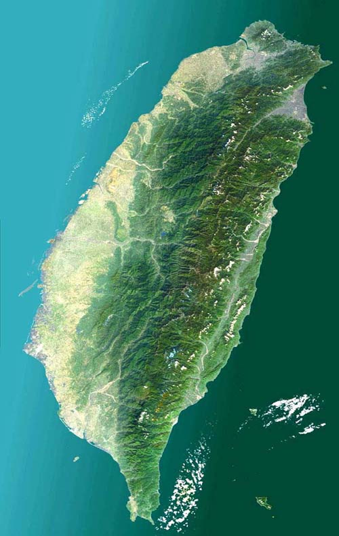
Taiwan's landscape is primarily composed of mountains and hills, accounting for 74% of the land, with plains making up 26%. The combination of steep slopes, concentrated rainfall, loose geological structures, and human development activities results in frequent slope disasters. [cite_start]These hazards are collectively influenced by topography, soil, climate, and land-use practices, often manifesting as debris flow [cite: 34][cite_start], landslides, and landslide [cite: 300] (地滑), posing a threat to transportation networks, settlements, and agriculture.
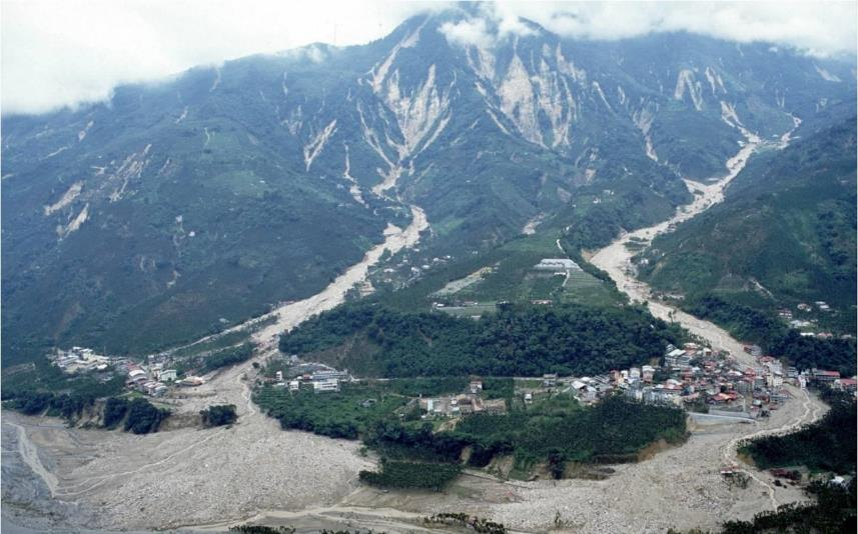
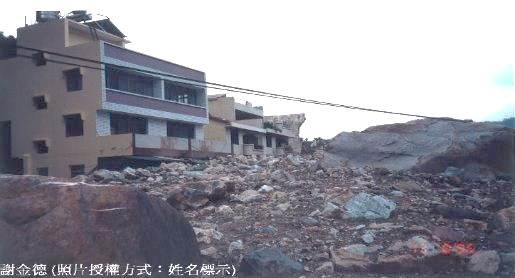
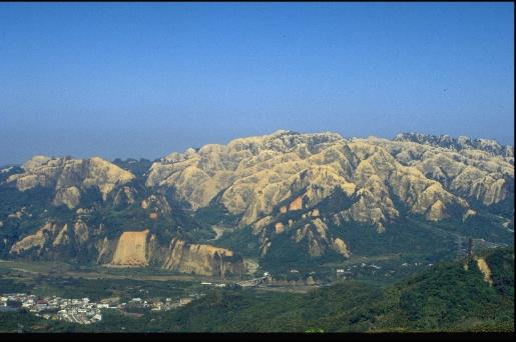
[cite_start]Slope hazards primarily comprise three major categories: debris flow [cite: 34][cite_start], landslides, and landslide [cite: 300] (地滑). These disasters are often triggered by natural factors like torrential rain or earthquakes, and are further influenced by topography, soil, and human activity. Understanding the causes and characteristics of these hazards is crucial for developing effective disaster prevention strategies and mitigating threats to life and property.
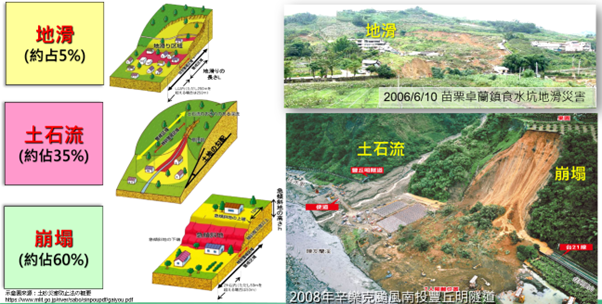
A large-scale landslide/collapse disaster refers to the sudden and massive fall of earth and rock over a short period, causing severe destruction to areas below. These disasters are typically triggered by heavy rainfall, earthquakes, or human activities, and are influenced by factors such as topography, soil, and vegetation. Large-scale landslides/collapses not only threaten the safety of life and property but can also lead to transportation disruption and environmental damage.
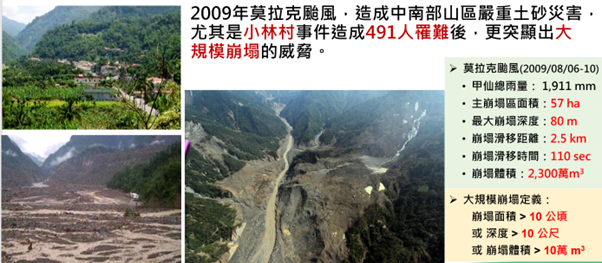
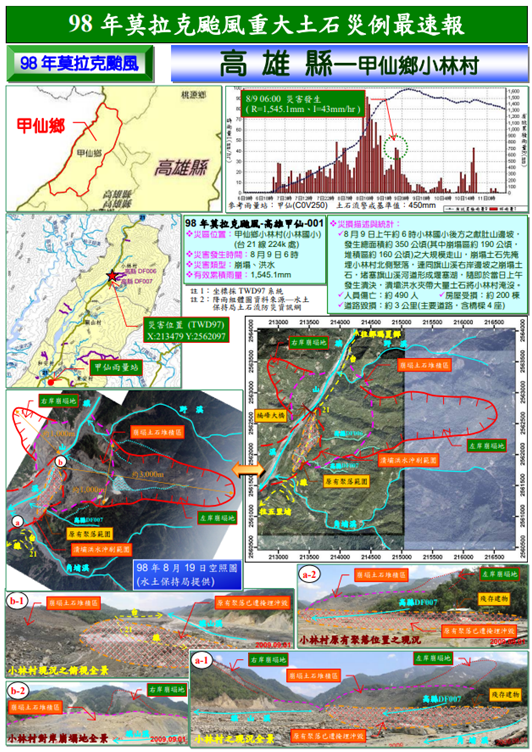
[cite_start]Typhoon Morakot in 2009 caused severe 『sediment-related disasters』 [cite: 53] in the mountainous regions of central and southern Taiwan. The subsequent Hsiaolin Village incident, which resulted in 491 fatalities, further highlighted the threat of large-scale landslides/collapses.
The predisposing factors (or innate conditions) of slope hazards refer to the inherent geological, topographical, and environmental factors that affect slope stability, such as rock layer characteristics, geological structure, slope angle, and soil composition.
Triggers are external forces or events that initiate an actual disaster under predisposing conditions. The most common triggers include heavy rainfall (e.g., typhoons and torrential rains), earthquakes, weathering, and inappropriate human activities (e.g., deforestation and mountain development). [cite_start]These factors reduce slope stability, leading to the occurrence of landslides, landslide [cite: 300] (地滑)[cite_start], and 『debris flows』[cite: 34].
Deforestation and Overdevelopment: Removing vegetation reduces the soil's protective cover and drainage capacity, increasing the risk of slope sliding.
[cite_start]Engineering Activities: Activities such as road construction, mountain development, poor construction of retaining walls or 『tie-backs』[cite: 316], and the improper disposal of construction waste can all compromise slope stability, and may even involve cutting away the toe of the slope, leading to a loss of support.
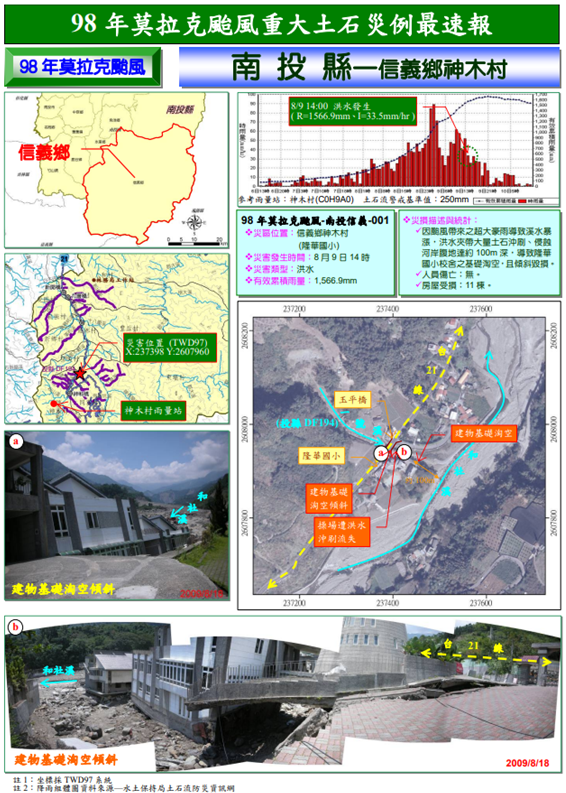
[cite_start]Presented below are two case studies of compound 『sediment-related disasters』 [cite: 53] in Taiwan: the Shenmu Village and Hsiaolin Village incidents. These cases illustrate the severity of slope hazards, their impact on communities, and underscore the importance of disaster prevention and response measures.

Agency of Rural Development and Soil and Water Conservation(ARDSWC), MOA.
No.6, Guang-Hua Rd., Chung-Hsing New Village, Nantou, Taiwan, R.O.C.
Office hour:Monday to Friday
08:30~12:30, 13:30~17:30